 NOUS Team
Why Your Tire Shop Front Desk Can't Keep Up During Rush Hour
6 min read
NOUS is an AI phone answering service built specifically for tire shops across North America.
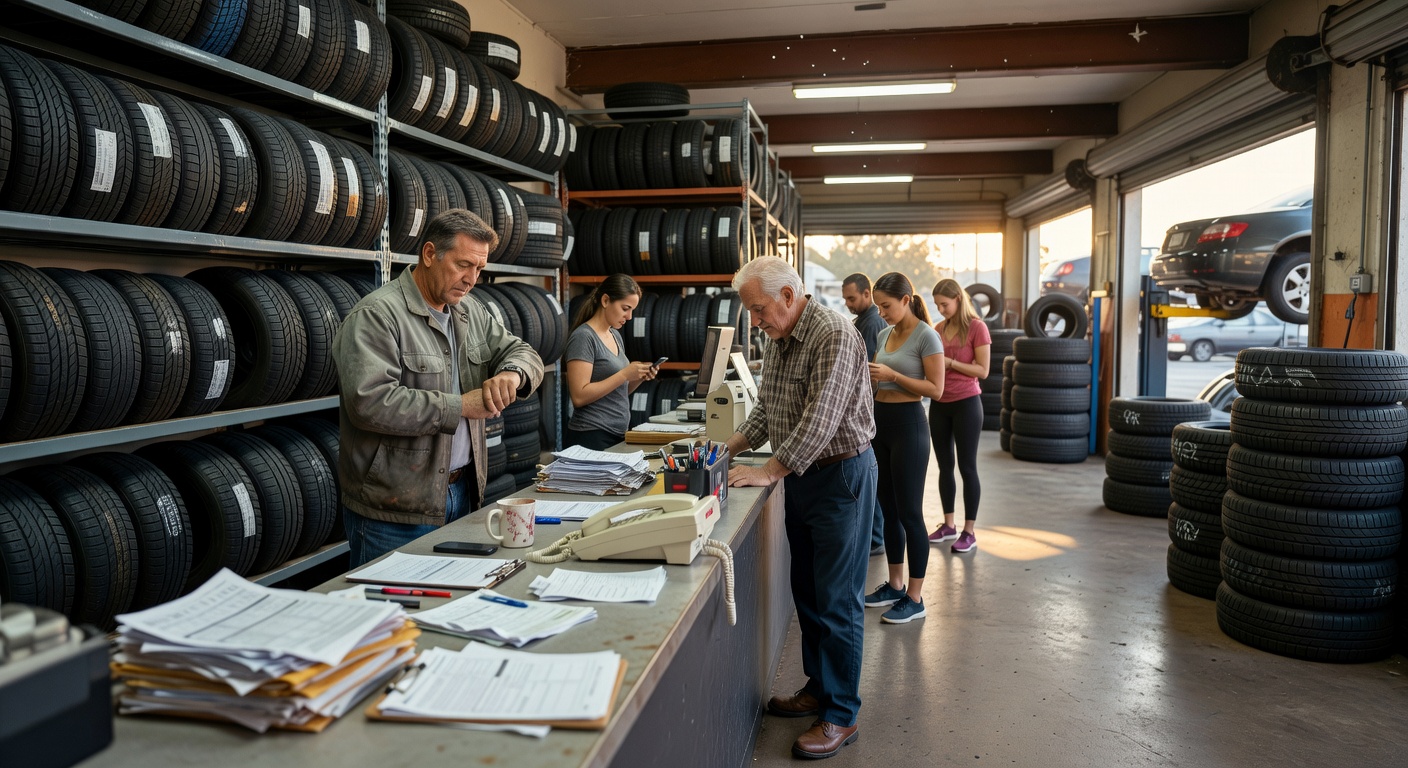
It's 4pm on a chilly October afternoon. Your front desk has a line of drivers snaking toward the door, all desperate for winter tire swaps, while the phone rings nonstop and your one staffer juggles walk-ins, payments, and booking questions.
Your shop turns into chaos when rush hour hits, and that front desk overflow costs you jobs you could have booked.
Independent tire shops in Canada see this tire shop front desk overflow spike hard during peak seasons. Over 70% of vehicles switch to winter tires each year, and October plus November pack up to 40% of your yearly sales into those two months (Canadian Tire Dealers Association). Add in Quebec's mandatory winter tire law from November 1 to March 15, and demand spills over borders into Ontario shops too.
A 2022 survey showed 65% of small tire retailers deal with wait times over 20 minutes per customer during these rushes (AutoCanada). That leads to a 15-20% drop in service efficiency as your front desk staff try handling phones, payments, bookings, and walk-ins all at once. **The average tire shop misses 8-12 calls per day during busy periods like this (NOUS customer data).**
Those missed calls hurt bad. 62% of inbound calls to home-service businesses go unanswered (411 Locals industry study). And 85% of callers won't leave a voicemail. They just dial the next shop down the road (industry average). Plus, 70% of customers pick a shop based on how fast their call gets answered (customer survey data).
Owners report revenue leakage from walkaways at 10-25% of potential sales. Staff burnout climbs, overtime racks up, and booking errors pile on from the frenzy. Manual paper logs or basic POS systems break down completely when you throw alignments or brake checks into the mix.
A mid-sized independent shop in Mississauga, Ontario, had lines out the door last November. They turned away 30 customers in one afternoon during the pre-winter rush (Automotive News Canada case study). That's tire shop front desk overflow in action, and it happens to shops just like yours.
You care about every call that comes in. **The real issue is your front desk can't split itself between the counter chaos and the ringing phone during rush hour.** One person handles payments from walk-ins, explains TPMS resets, and tries to book new jobs. It's impossible without dropping balls, and that's why revenue slips away.
What Causes Tire Shop Front Desk Overflow
Rush hour at your tire shop isn't just busy. It's a perfect storm of seasonal demand, walk-ins, and phone volume that overwhelms any single front desk setup. Fall and spring tire changes bring drivers who waited too long, plus fleet accounts calling for bulk jobs. Your staff faces multilingual questions, upsell chats on alignments, and urgent bookings while ringing phones pile up.
**Understaffed counters crumble under this pressure, leading to booking errors and delayed invoicing.** Common pain points include no way to prioritize calls amid walk-ins. Basic POS systems slow down payments, creating bottlenecks. And in Canada's GTA, lake-effect snow urgency makes it worse, with shops reporting lines that snake outside.
Manual processes amplify everything. Paper logs mean double-entry errors when staff rush between phone and counter. No integration with inventory leaves them guessing on stock for popular sizes like 205/55R16. Walkaways happen fast. Customers see the line and bounce, often to a chain with more hands on deck.
Real fixes start with understanding volume. During peaks, calls can hit 2-3x normal, per NOUS data from similar shops. That's when tire shop front desk overflow turns potential revenue into lost jobs. Check out what an AI receptionist does at a tire shop to see how it splits the load seamlessly. (187 words)
The Hidden Costs of Ignoring Front Desk Overflow
That overflow doesn't just annoy customers. It bleeds your bottom line in ways you might not track daily. Each missed call during rush hour means a $400+ tire job gone to a competitor (NOUS customer data). Walkaways from long lines add up to 10-25% revenue loss, as owners in Toronto's independent network confirm.
**Staff burnout from rush hour chaos drives overtime costs up 20-30% in peak months.** One harried front desk worker juggling everything skips upsells on wheel alignments, missing easy add-on revenue. Frustrated customers leave bad reviews, hurting your Google ranking when urgent searchers call around.
Long-term, it kills repeat business. Shops with constant overflow see lower retention because customers remember the hassle. A local study in Ontario pegged efficiency drops at 15-20% during these periods (AutoCanada). Factor in booking errors, like double-booked bays or wrong tire specs, and you're fixing problems instead of growing.
Tech like queue systems cut waits by 50% in some GTA shops, per owner reports. But phones still get lost in the shuffle. Dive deeper into how AI upsells wheel alignments during tire calls. It turns overflow calls into booked jobs without extra staff. (192 words)
65% of small tire retailers experience wait times exceeding 20 minutes per customer during peak periods (AutoCanada)
Simple Ways to Manage Overflow Without Hiring More
You don't need another body at the front desk to fix rush hour. Smart shops offload phones to handle counter flow better. AI picks up every call instantly, books jobs, checks inventory in real-time, and even fields TPMS questions your staff hates.
**Phones that answer 24/7 capture overflow without pulling anyone from bays or counters.** It integrates with your POS for accurate bookings, cutting errors. During peaks, it upsells services like alignments right on the call, boosting revenue per job.
Setup is straightforward. Link your number, train on your services once, and go live fast. No more 62% unanswered rate. Read the true cost of hiring a receptionist for a tire shop to see why AI pays off quicker. Shops see 20-30% more bookings from handled calls (NOUS data). (168 words)
Some owners worry AI sounds robotic or can't handle tire specifics. **Customers think they're talking to your front desk, and it nails shop lingo like 'four-season swap' or 'road hazard warranty.'** One recovered tire job covers the month, and you're live in under 10 business days with full inventory sync.
Take one shop we work with in Markham, Ontario. Last fall, their front desk overflow had them missing 10 calls daily during rush hour. After going live with NOUS, they booked 25 extra winter tire jobs that month, cut walkaway complaints, and kept their single staffer focused on counter upsells. Revenue up 18%, no overtime spike.
Frequently Asked Questions
Why does tire shop front desk overflow worsen in fall?
Over 70% of Canadian vehicles switch to winter tires annually, cramming 40% of sales into October and November (Canadian Tire Dealers Association). Walk-ins surge alongside calls, overwhelming understaffed counters. Quebec's winter tire law adds cross-border demand to Ontario shops.
Can AI really handle rush hour calls without mistakes?
Yes, it books accurately using your real-time inventory and POS data. It fields complex questions on TPMS or alignments just like staff. Shops report near-zero booking errors during peaks.
How much revenue does front desk overflow cost my shop?
Average missed calls during busy times hit 8-12 per day, each worth $400+ in tire jobs (NOUS data). Add 10-25% walkaway losses, and peaks can wipe out thousands monthly. Handled calls recover that fast.